
Main Water Line Repair & Replacement
The main water line is the one pipe where a failure affects every fixture in the house at once.
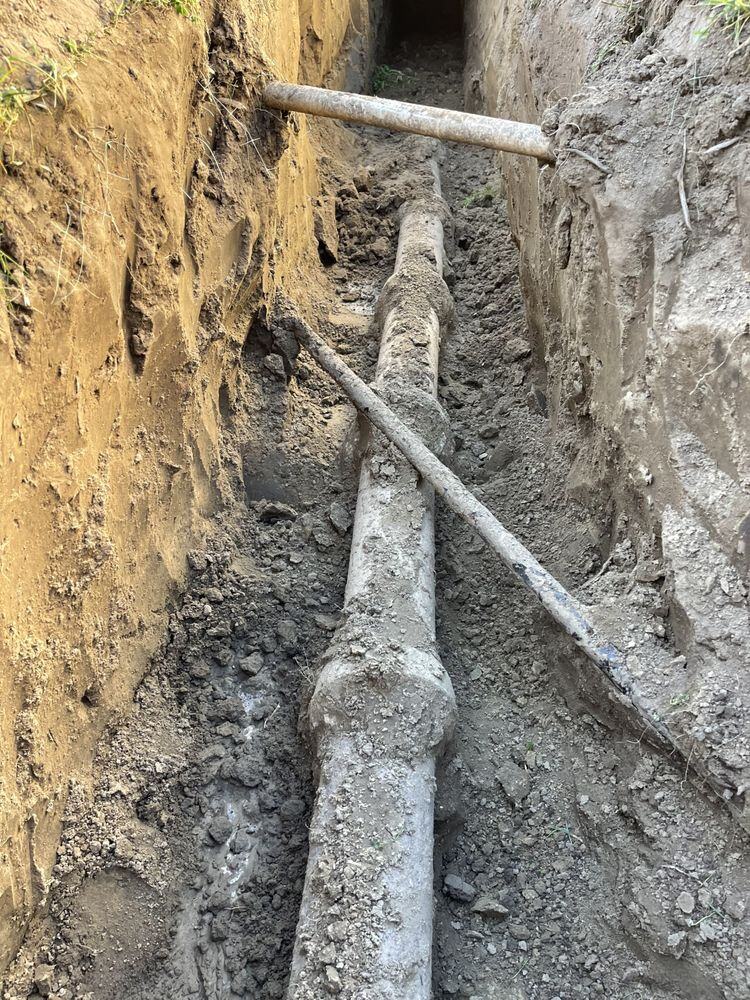
This is the service line running from your water meter to the house. It's usually buried a few feet down, it's usually the responsibility of the homeowner from the meter onward, and it's easy to ignore until pressure drops or a wet patch appears in the yard.
Failures come from age, soil movement, and — with older galvanized service lines — corrosion narrowing the pipe from the inside until pressure suffers. Replacement can sometimes be done with a trenchless pull rather than a full open trench, depending on the path, depth, and what sits above it. We'll tell you which methods genuinely apply to your yard instead of quoting only the one we'd prefer to do.
When this is likely your problem
What's included — and what isn't
Included in the quote
- Pressure test and meter check to confirm the service line is the problem
- Locating the line's path and depth before any digging
- Repair or full replacement of the service line as agreed
- Connection at the meter and at the house
- Backfill and rough grading of the trench
- Pressure test of the new line before it's covered
Billed separately
- Landscaping restoration — sod, plants, irrigation heads and lines, decorative rock
- Hardscape replacement such as driveway, walkway, or patio sections
- Permits, city inspection, and right-of-way fees
- Work on the utility's side of the meter
- Interior repiping, if the pressure problem turns out to be inside the house
How this job is priced
Service line work is quoted after we've confirmed the line is the problem and located its path — length, depth, and what sits on top of it drive the number more than anything else. Where trenchless and open-cut are both viable, you get both prices and can weigh cost against yard disruption yourself.
What the visit involves
Confirm it's the service line
Low pressure has several causes. We test before recommending you dig up a yard.
Locate path and depth
Knowing exactly where the line runs means digging once, not exploring.
Price the methods that fit
Trenchless where the path allows it, open-cut where it doesn't.
Replace, test, backfill
New line in, pressure tested before covering, trench backfilled and rough-graded.
Questions about main water line repair & replacement
Where does my responsibility for the line start?
Generally, the homeowner is responsible from the meter to the house, and the utility handles everything on their side of the meter. The exact boundary can vary, so if our testing points at a problem on the utility's side, we'll tell you and point you to the right department rather than doing work you shouldn't be paying for.
Can this be done without digging up my whole yard?
Sometimes. A trenchless pull replaces the line through small access pits at each end, which spares most of the lawn. Whether it works depends on the line's path, depth, obstructions, and what's on the surface. We check before quoting and won't promise trenchless on a yard where it isn't realistic.
How long will my water be off?
For most replacements, water is off for part of a single day rather than days on end. We'll give you a realistic window once we know the length and method, and we'll tell you before we shut anything off.
Will low pressure definitely be fixed by replacing the line?
Only if the line is actually the cause, which is why we test first. Low pressure can also come from a failing pressure regulator, a partially closed valve, or corroded interior piping. Replacing a service line that wasn't the problem is an expensive way to learn that, so we confirm before recommending it.
Ready to get this looked at?
Call and describe what's happening. You'll get an honest read before anyone drives out.